Choosing a trail
For a short, easy walk: the riverside trail in William O’Brien’s lower unit stays nearly flat as it follows the St. Croix past silver maples and backwater sloughs. It is the best bet with small children, and the most likely place to see eagles, herons and beavers.
For views: cross Highway 95 to the upland trails. The savanna and prairie loops climb gently onto open hills scattered with bur oaks; on clear days the views stretch across the valley. Late summer brings waist-high bergamot, black-eyed Susans and coneflowers.
For a longer outing: link the upland loops into a circuit of several miles, or combine the river trail with the wetland trail. Bring water — there is little shade on the prairie in July.
In the village: the historic walking tour is about a mile on sidewalks and quiet streets, with one climb.
The table below lists every named trail that OpenStreetMap volunteers have mapped within about six miles. Lengths are measured from the map geometry.
Cross-country skiing
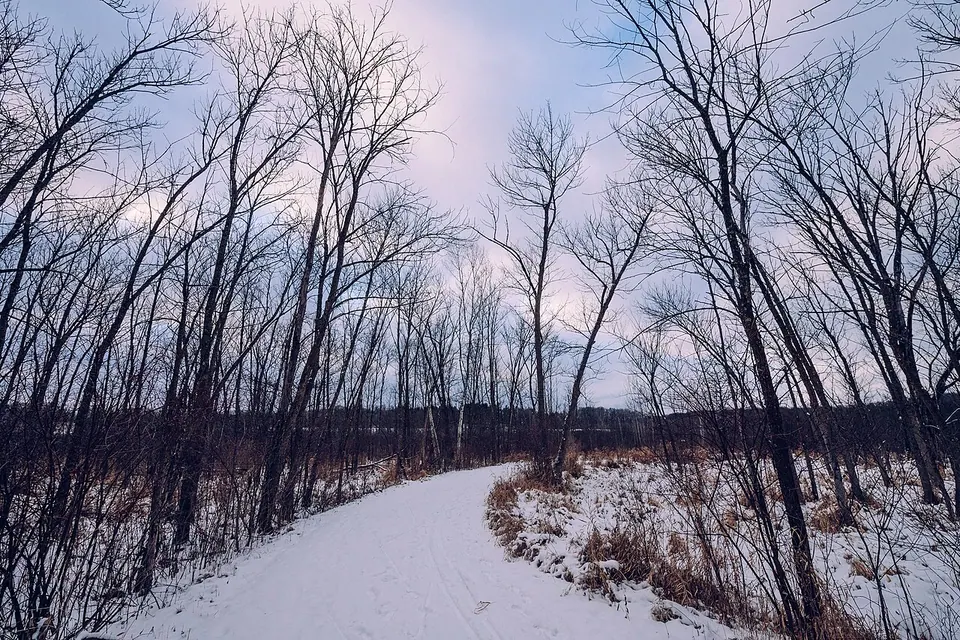
When there is enough snow, many of the park’s upland trails are groomed for cross-country skiing. Our climate data shows why the season is short and variable: the village averages about 6 inches of snow in January and 6 in February, and midwinter thaws are common. Ski after fresh snow, and check the DNR grooming report before you drive. A Minnesota Ski Pass is required for skiers 16 and older on groomed state trails, in addition to the park vehicle permit.
Seasons on the trails
- April–May: muddy but spectacular — spring ephemeral wildflowers (bloodroot, hepatica, rue anemone) in the river woods, and the warbler migration.
- June–August: lush and buggy. Hike early, use repellent, check for ticks.
- September–October: the best hiking weather of the year and the savanna oaks turn bronze. Usually peak color is early to mid October.
- November: quiet and open, but watch for park closures during managed deer hunts.
- December–March: skiing, snowshoeing (off the groomed tracks) and winter birding.
Last reviewed October 1, 2026.
.jpg)