Before Marine
Long before the sawmill, the St. Croix was a homeland and a travel route. Dakota and Ojibwe people fished, hunted and gathered along the valley, harvested wild rice in its backwaters and used the river as a canoe road between the Mississippi and the Lake Superior country. The valley lay near the shifting boundary between the two nations.
In 1837 the United States signed treaties with the Ojibwe and the Dakota that ceded the land between the St. Croix and the Mississippi. Once they were ratified the following year, timber speculators raced up the river to claim the best pine and the best water-power sites.
Marine Mills, 1839
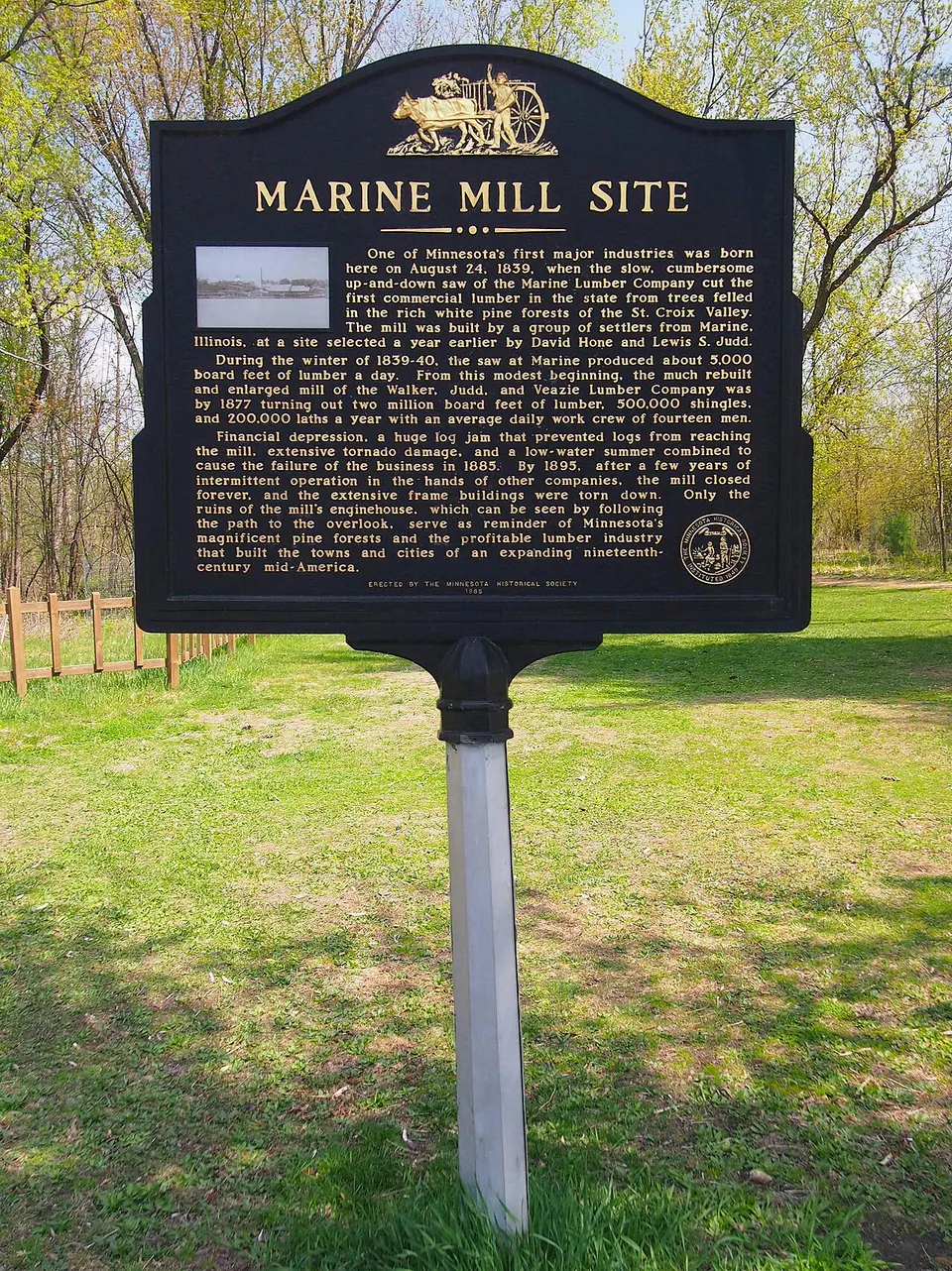
One of the first groups to arrive came from Marine, Illinois. Led by David Hone and Lewis Judd, they chose a spot where a stream fell steeply through a ravine to the river — perfect for a dam and a water wheel. Their sawmill began cutting boards in August 1839, and the settlement took the name Marine Mills in honor of their hometown.
For half a century the mill was the reason the village existed. Logs cut in the pineries upstream were floated down on the spring floods, sawn at Marine and sent downriver as lumber. The mill switched from water to steam power and, by the time it closed, had cut roughly 197 million board feet of lumber. The Minnesota Historical Society dates its closing to 1895.
Yankees and Swedes
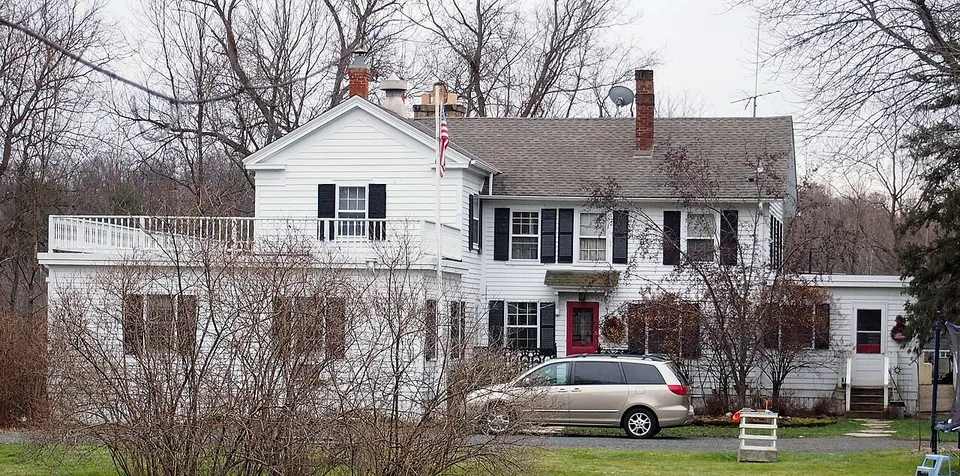
Marine grew as two communities that needed each other. The mill owners, merchants and professionals — mostly “Yankees” from New England, New York and the older Midwest — built their houses on the bluffs above the village. From the 1850s on, the workers increasingly came from Sweden, settling first on the low ground north and south of the center and later on the bluff to the west. Nearby Scandia is remembered as the site of one of Minnesota’s first Swedish settlements.
That double story is written into the buildings. When the village was listed on the National Register in 1974, the nomination described three distinct areas: the original commercial center around Judd Street, the Yankee residential area on the bluffs, and the Swedish working-class neighborhoods. Sixty buildings and three ruin sites were counted as contributing to the district.
After the pine
By the 1890s the pine that was easy to reach was gone. The mill closed, and Marine shrank: the census counted 679 people in 1890 but only 297 in 1930. Farms on the surrounding uplands and a few summer homes kept the village alive, and in 1917 it officially changed its name to Marine on St. Croix.
That long quiet spell is the reason Marine looks the way it does. With little money and little pressure to rebuild, the 19th-century store, meeting house, village hall and houses simply stayed.
Preservation and the river
After World War II the river itself became the attraction. Alice O’Brien’s gift of riverfront land led to William O’Brien State Park in 1947, and in 1964 residents founded the Marine Restoration Society to care for the village’s public buildings. The protection of the St. Croix as a national Wild and Scenic River in 1968 and 1972 kept its banks largely undeveloped. National Register listings followed for the mill site in 1970 and the historic district in 1974.
Marine today
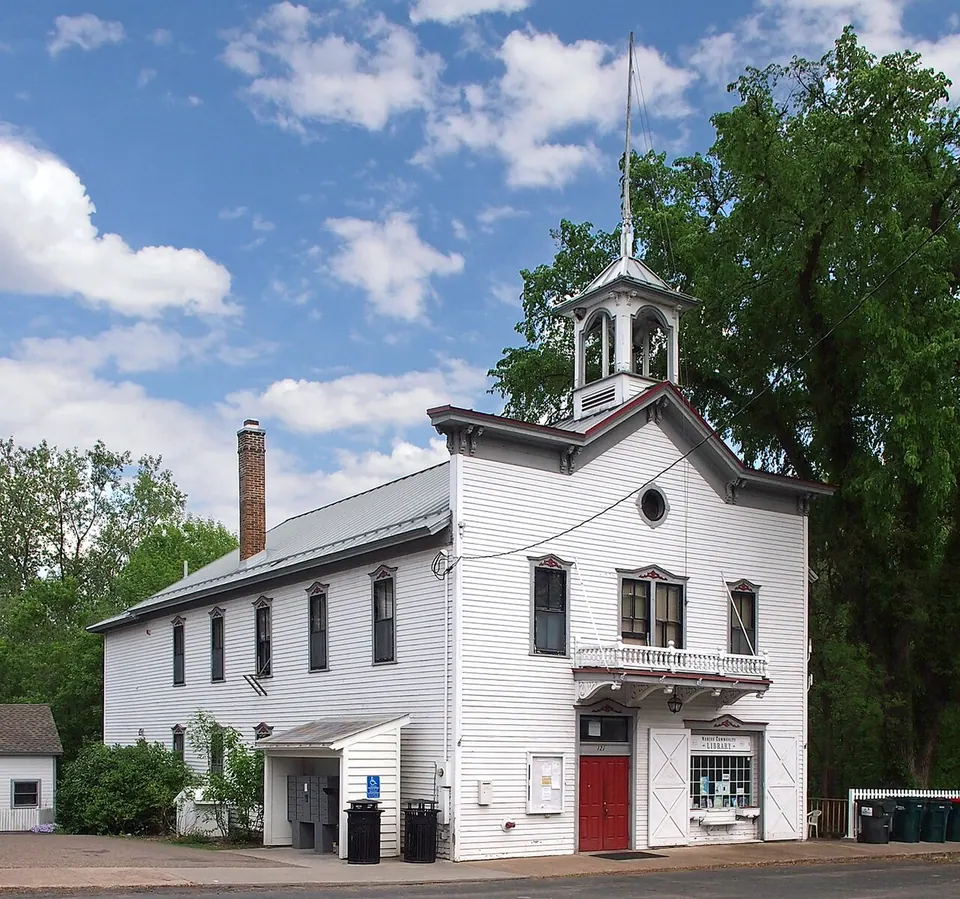
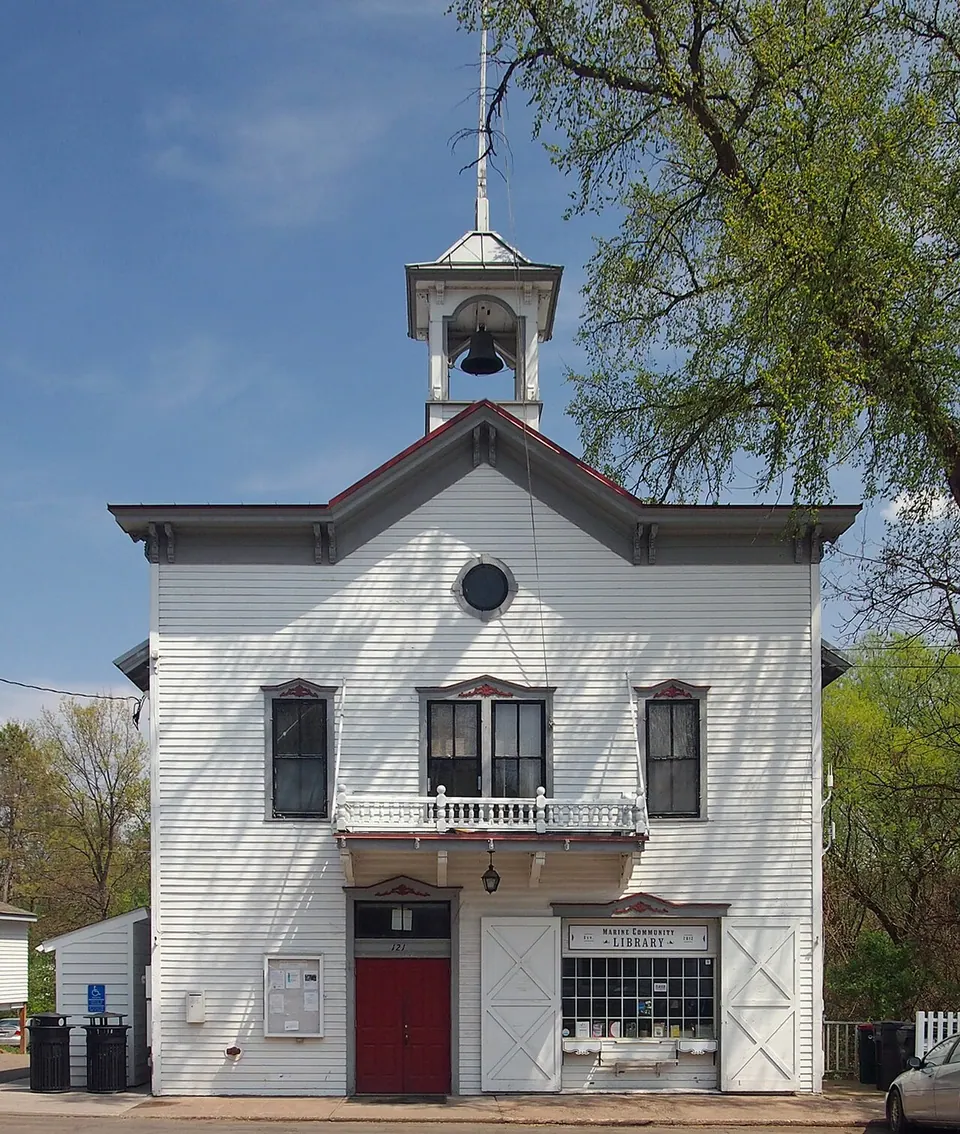
Today Marine is a small residential city of about 664 people within commuting distance of the Twin Cities. Its city council still meets in the 1888 Village Hall, the general store still sells groceries, and the old mill site is a quiet park. The population climbed back to its mill-era level by 2010, but the village has worked hard to keep its scale and character.
People associated with Marine include the folklorist Marjorie Edgar, the biologist and writer Ellen Torelle Nagler, the jazz pianist Butch Thompson and the novelist Walter Kirn.
Last reviewed October 1, 2026.