What happened here
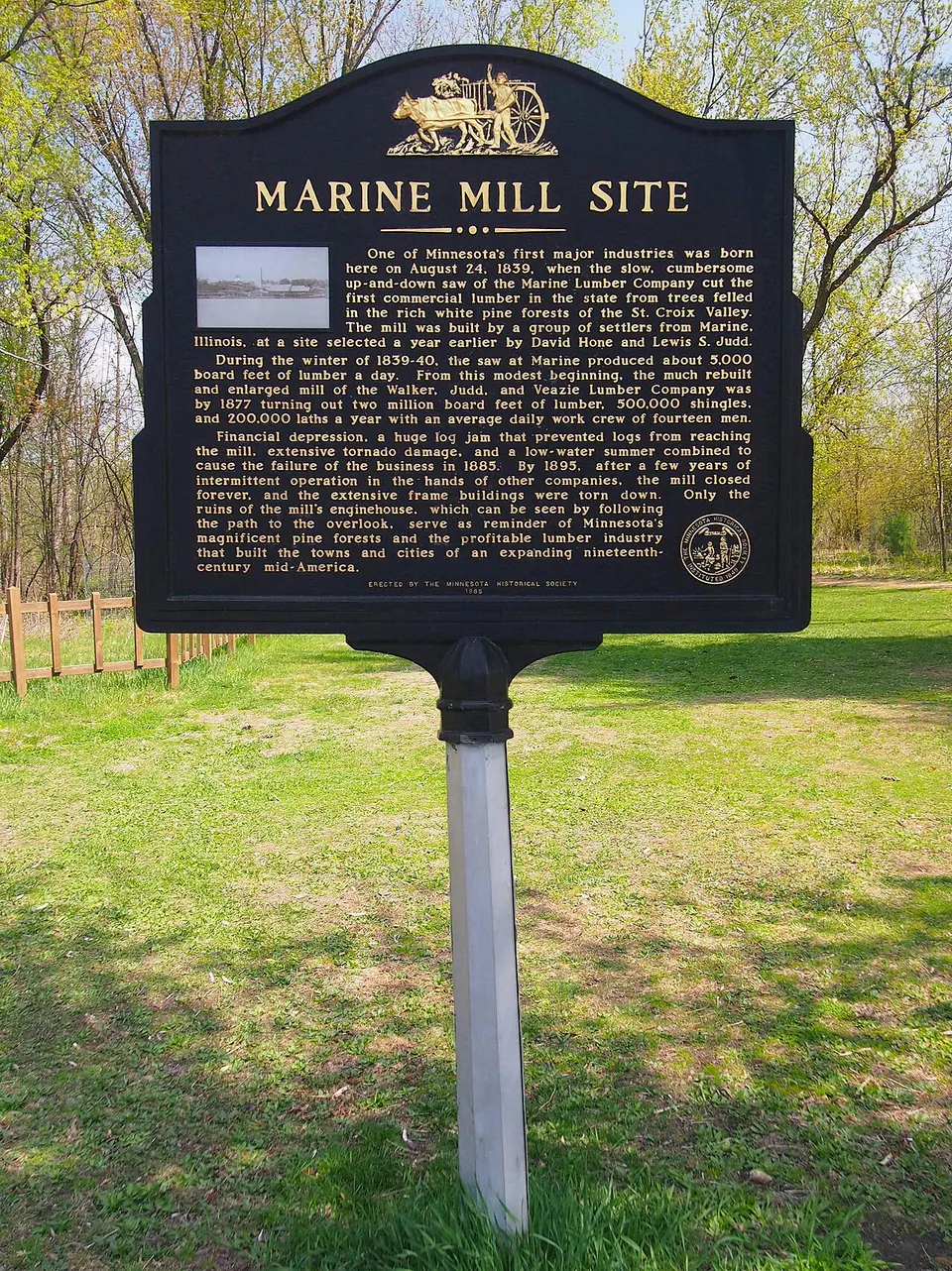
In the late 1830s, two lumbermen from Marine, Illinois — David Hone and Lewis Judd — came up the St. Croix looking for pine and water power. The treaties of 1837 had just opened the land on the river’s west bank to settlement, and the bluffs were covered in white pine. Their company picked a spot where a cold, steady stream dropped down a ravine to the river, built a dam and a mill, and in August 1839 started cutting boards. It was the first commercial sawmill in what would become Minnesota.
They named the settlement Marine Mills after their hometown. The mill was later converted from water power to steam and kept running for more than half a century; the Minnesota Historical Society dates its closing to 1895. Over its lifetime it cut roughly 197 million board feet of lumber — enough to frame more than ten thousand houses. Logs floated down from the pineries upriver, and finished lumber went downstream by raft and steamboat toward the growing towns on the Mississippi.
When the easily reached pine was gone, the mill closed, its frame buildings were taken down and the machinery was sold. What remains are the stone foundations and footings, now slowly being reclaimed by trees — which is exactly what makes the site so evocative.
What you’ll see
- The footings of the mill buildings on a terrace above the river, with interpretive signs explaining what stood where.
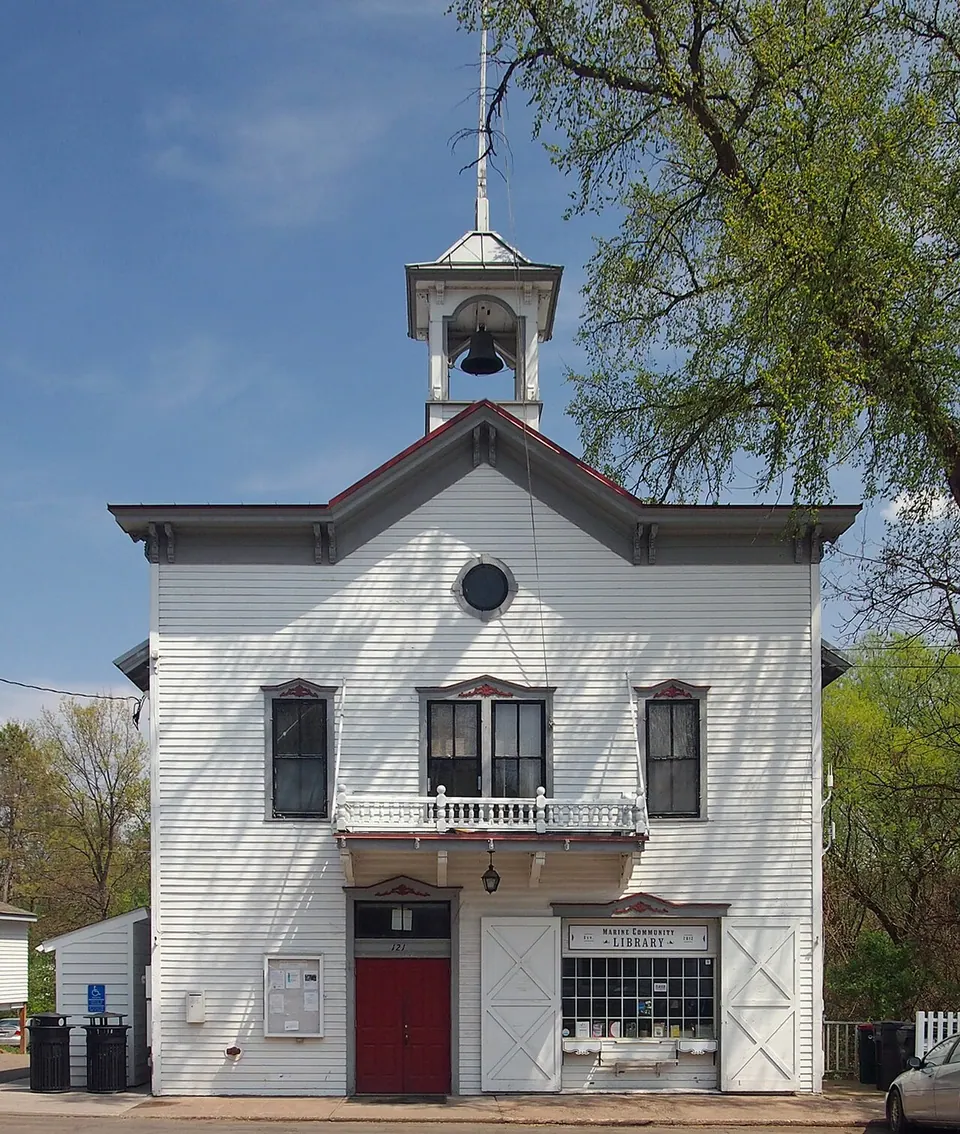
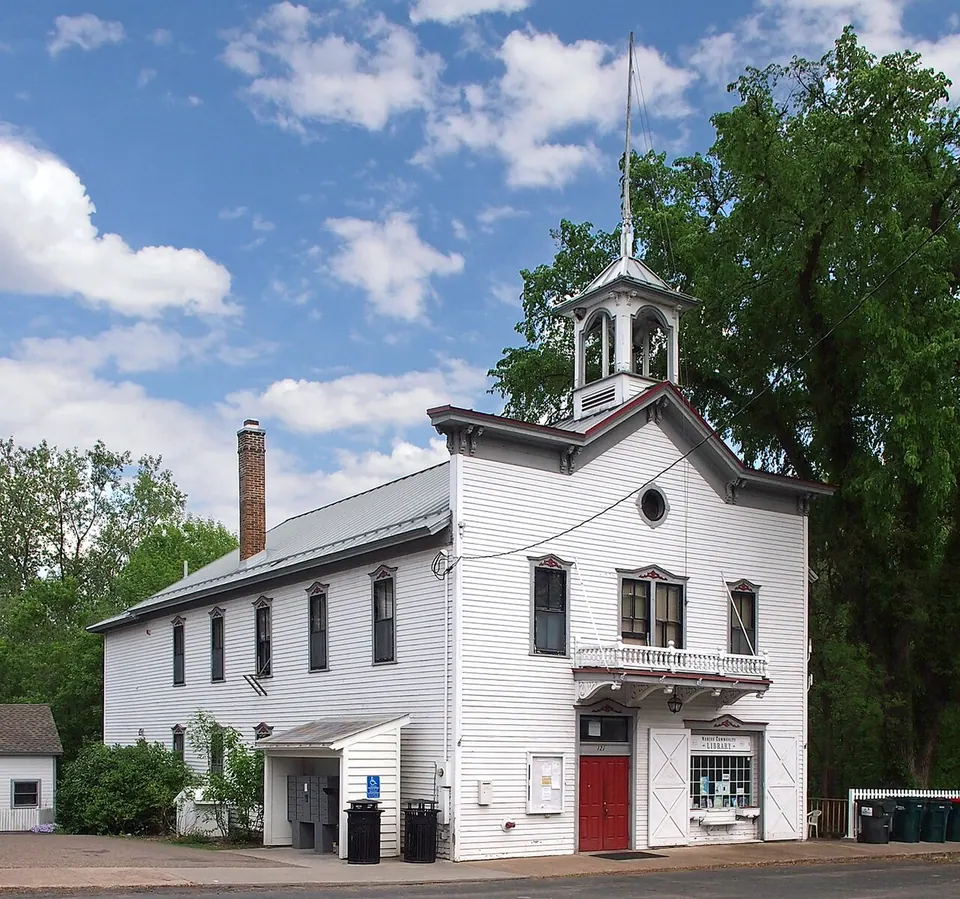
- The Mill Stream, which once powered the wheel, tumbling down to the St. Croix next to the Village Hall.
- River views from the edge of the terrace, and paths that connect to the village and the landing.
The site has been on the National Register of Historic Places since 1970, and it is also part of the larger Marine on St. Croix Historic District. It belongs to the Minnesota Historical Society and is cared for day to day by the City of Marine and a volunteer Mill Site Committee.
Tips
- Combine it with the historic walking tour; the mill is the natural last stop.
- Paths can be muddy in spring and icy in winter. Wear proper shoes and keep children back from the bluff edges.
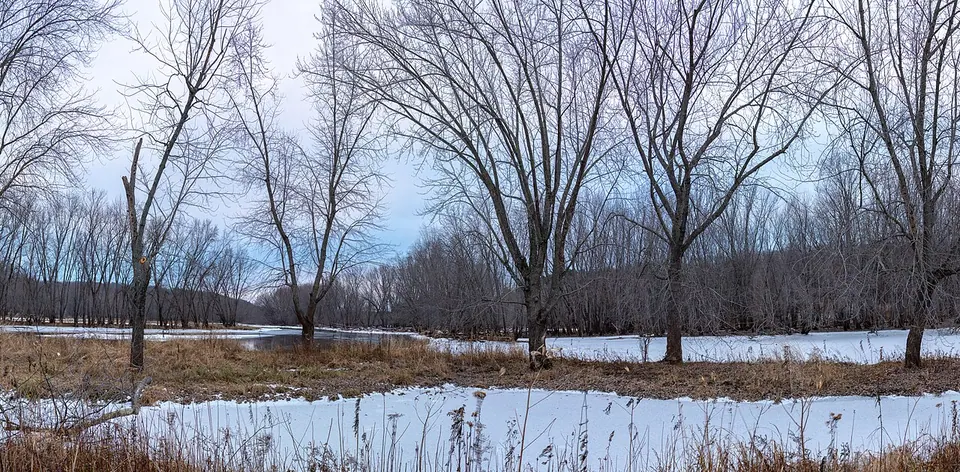
- Visit in late October or early spring, when the leaves are off and the foundations are easiest to see.
Last reviewed October 1, 2026.